
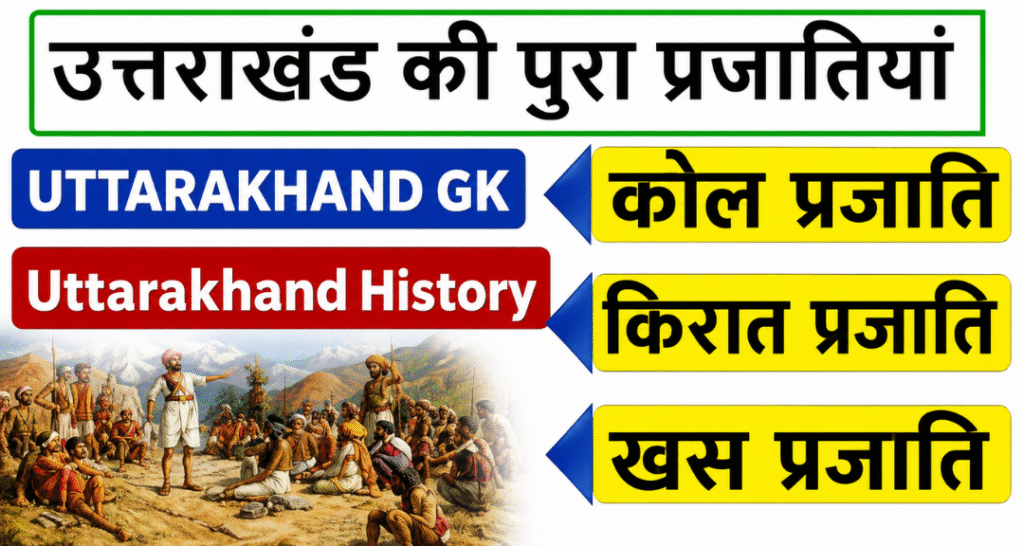
उत्तराखंड में मानव सभ्यता का उद्भव ऋग्वैदिक काल के पूर्व से माना जाता है जिसका कारण यहां पर महापाषाणीय शवधानों के अवशेषों का मिलना है। इन प्रजातियों का उल्लेख वेद, महाभारत, पुराण, रामायण व अन्य महत्वपूर्ण ग्रंथों में पर्याप्त रूप से मिलता है। इन पुरा प्रजातियों में आद्य ऑस्ट्रेलिआई तथा मंगोलॉइड आदि प्रजातियां उत्तराखंड में अपना अस्तित्व बनाए हुए हैं। उत्तराखंड की प्रमुख पुरा प्रजातियों का वर्णन निम्नलिखित है:
The origin of human civilization in Uttarakhand is believed to be from before the Rigvedic period, due to the discovery of megalithic burial remains here. These tribes are extensively mentioned in the Vedas, Mahabharata, Puranas, Ramayana, and other important texts. Among these ancient tribes, Proto-Australoid and Mongoloid populations have maintained their existence in Uttarakhand. The major ancient tribes of Uttarakhand are described below:
कोल (Kol)
इसको उत्तराखंड की सर्वाधिक पुरा प्रजाति माना जा सकता है। बाण व कालिदास की कृतियों में इनका वर्णन मिलता है।(This can be considered the oldest tribe of Uttarakhand. Their description is found in the works of Bana and Kalidasa.)
वहीं पुरा साहित्य में इनका नाम ‘मुंड’ तथा ‘सबर’ नाम भी मिलता है।(In ancient literature, they are also known as ‘Mund’ and ‘Sabar’.)
कोलों का मुख्य व्यवसाय कृषि था वहीं नृत्य, संगीत, मदिरा पान कोलों के जीवन का अभिन्न अंग है। (The main occupation of Kols was agriculture, while dance, music, and liquor consumption were integral parts of their lives.)
कुमार-कुमारी गृह उनके सामाजिक जीवन की प्रमुख प्रथा थी। (The Kumara-Kumari Griha was a major practice of their social life.)
कोलों में मृतकों के शवों को खुले में फेंकने की प्रथा प्रचलित थी। (The practice of leaving the dead bodies in the open was prevalent among the Kols.)
उत्तराखंड की जीवन-शैली में आज भी इसका प्रभाव परिलक्षित होता है। (Its influence is still reflected in the lifestyle of Uttarakhand today.)
किरात (Kirat)
इस प्रजाति के अन्य नाम धीर, किन्नर, धीर पुरूष भी हैं। (Other names for this tribe are Dhir, Kinnar, Dhir Purush.)
स्कंद पुराण में किरातों को ‘भिल्ल’ शब्द से संबोधित किया गया है। (In Skanda Purana, Kirats are addressed by the word ‘Bhill’.)
किरातों द्वारा कोलों के क्षेत्र में आधिपत्य स्थापित किया गया था। (The Kirats had established their dominance in the area of the Kols.)
वर्तमान समय में इनके वंशज तराई, भाबर, दीदीहाट, मुनस्यारी, टनकपुर आदि में निवास कर रहे हैं। (Currently, their descendants reside in Tarai, Bhabar, Didihat, Munsyari, Tanakpur, etc.)
किरात मुख्यतः भ्रमणकारी पशुचारक थे जो कि ऋतुप्रवास के लिए जाने जाते थे। (Kirats were mainly nomadic pastoralists known for seasonal migration.)
यह भेड़-बकरियों से प्राप्त ऊन से अपना जीविकोपार्जन करते थे। (They earned their livelihood from the wool obtained from sheep and goats.)
किरातों में संयुक्त परिवार की प्रथा प्रचलित थी और इनका जीवन धर्म प्रधान होता था। (The practice of joint families was prevalent among the Kirats, and their lives were religion-dominated.)
ये बहुदेववाद के समर्थक थे जो कि मुख्यतः शिव की पूजा करते थे। (They were supporters of polytheism and mainly worshipped Shiva.)
खश (Khash)
खशों द्वारा किरातों के आधिपत्य को समाप्त कर उत्तराखंड में अपना आधिपत्य जमाया गया। (The Khash ended the dominance of the Kirats and established their own dominance in Uttarakhand.)
पुरा भारतीय साक्ष्यों में इनका वर्णन महाभारत, मुद्राराक्षस, वृहत्संहिता में मिलता है। (In ancient Indian evidence, their description is found in Mahabharata, Mudrarakshasa, Brihatsamhita.)
इसके अतिरिक्त टॉल्मी और अलबेरूनी द्वारा भी अपने ग्रंथों में खशों का उल्लेख किया गया है। (Additionally, Ptolemy and Al-Biruni have also mentioned the Khash in their texts.)
खशों की आजीविका का प्रमुख साधन कृषि और पशुपालन था। (The main source of livelihood for the Khash was agriculture and animal husbandry.)
इसके अतिरिक्त वे खनिज, जड़ी-बूटियों, शहद इत्यादि के द्वारा भी अपना जीविकोपार्जन करते थे। (Additionally, they also earned their livelihood through minerals, herbs, honey, etc.)
खश अपनी वीरता के लिए प्रसिद्ध थे और उन्होंने महाभारत में कौरवों की तरफ से युद्ध किया था जिसके पश्चात् उन्होंने मुगलों को भी सेवा प्रदान की। (The Khash were famous for their bravery and fought on the side of the Kauravas in the Mahabharata, after which they also provided service to the Mughals.)
खशों को ब्रिटिश युग में शूद्र वर्ग में शामिल किया गया था। (The Khash were included in the Shudra class during the British era.)
खशों में ही घर-जमाई, जेठों (ज्येष्ठ पुत्र को संपत्ति), झटेला (पूर्व पति से उत्पन्न पुत्र), टेकूवा प्रथा प्रचलित है। (Among the Khash, practices like Ghar-Jamai, Jethon (property to the eldest son), Jhatela (son born from a previous husband), Tekuwa are prevalent.)
वहीं इस समुदाय में अंध-विश्वास तथा देवदासी प्रथा जैसी कुरीतियों का भी प्रचलन था। (Moreover, superstitions and social evils like the Devadasi system were also prevalent in this community.)
भोटांतिक प्रजाति या शौका (Bhotantik Tribe or Shauka)
शारीरिक बनावट के कारण इन्हें किरात प्रजाति से संबंधित माना जाता है। (Due to their physical structure, they are considered related to the Kirat tribe.)
शौका सामान्यतः मंगोल प्रजाति से संबंधित हैं। (Shauka are generally related to the Mongoloid race.)
शौका प्रजाति संपूर्ण उत्तराखंड में पाई जाती है किंतु चमोली, उत्तरकाशी, अल्मोड़ा, बागेश्वर में यह प्रमुखता से है। (The Shauka tribe is found throughout Uttarakhand, but it is prominent in Chamoli, Uttarkashi, Almora, and Bageshwar.)
शौका प्रजाति का मुख्य पेशा व्यवसाय है और यह पर्वतीय कंदराओं में निवास करते हैं। (The main profession of the Shauka tribe is business, and they reside in mountain caves.)
वहीं ऋतु प्रवास इनकी मुख्य विशेषता है। (Seasonal migration is their main characteristic.)
इनके द्वारा ऋतु प्रवास, समूह के रूप में किया जाता है जिसमें समूह को ‘कुंच’ कहा जाता है। (They undertake seasonal migration in groups, where the group is called ‘Kunch’.)
भोटांतिक स्वयं को हिंदू क्षत्रिय मानते हैं, जो कि चावल से निर्मित ‘जान’ पेय पदार्थ का उपयोग करते हैं। (The Bhotantik consider themselves Hindu Kshatriyas, who consume a rice-based beverage called ‘Jaan’.)
उनके प्रमुख देवी-देवताओं में घूरमा (वर्षा का देवता), धबला (संपत्ति का देवता) का प्रचलन है। (Among their main deities, Ghurma (god of rain) and Dhabla (god of wealth) are prevalent.)
वहीं इनमें बकरे और सांड की बलि देने की प्रथा प्रचलित है। (Moreover, the practice of sacrificing goats and bulls is prevalent among them.)
उत्तराखंड की प्राचीन जनजातियों के प्रमुख सांस्कृतिक त्योहार (Major Cultural Festivals of Ancient Tribes of Uttarakhand)
उत्तराखंड की प्राचीन जनजातियां अपनी समृद्ध सांस्कृतिक धरोहरों और विविध परंपराओं के लिए जानी जाती हैं। उनके प्रमुख सांस्कृतिक त्योहार निम्नलिखित हैं:
The ancient tribes of Uttarakhand are known for their rich cultural heritage and diverse traditions. Their major cultural festivals are as follows:
माघे संक्रांति (Maghe Sankranti)
होली (Holi)
बुढ़ाणी (Budhani)
बसंत पंचमी (Basant Panchami)
दीपावली (Deepawali)
होलू (Holu)
भग्वाल (Bhagwal)
फूलदेई (Phooldei)
हरेला (Harela)